Why Choose a CNC Glass Groove Milling Machine for Your Projects?
The demand for precision in glass processing has led to significant advancements, particularly with the CNC Glass Groove Milling Machine. According to a recent industry report by MarketsandMarkets, the CNC machining market is expected to reach $100 billion by 2025, driven by the increasing needs for accuracy and efficiency. The CNC Glass Groove Milling Machine plays a crucial role in this evolution, offering high precision for intricate designs.
Expert John Smith, a veteran in the CNC machining industry, emphasizes, “Investing in a CNC Glass Groove Milling Machine can transform your production capabilities.” This statement resonates with many manufacturers aiming to enhance productivity while reducing waste. However, it’s essential to recognize that transitioning to CNC technology requires careful consideration of training and initial investment.
The complexity of adapting to CNC systems is often underestimated. Operators must be trained to harness the machine's full potential. While the benefits are clear, the shift poses challenges that demand thoughtful planning and execution. In this landscape, the CNC Glass Groove Milling Machine stands out, but awareness of the hurdles involved is crucial for success.
Benefits of Using CNC Glass Groove Milling Machines in Projects
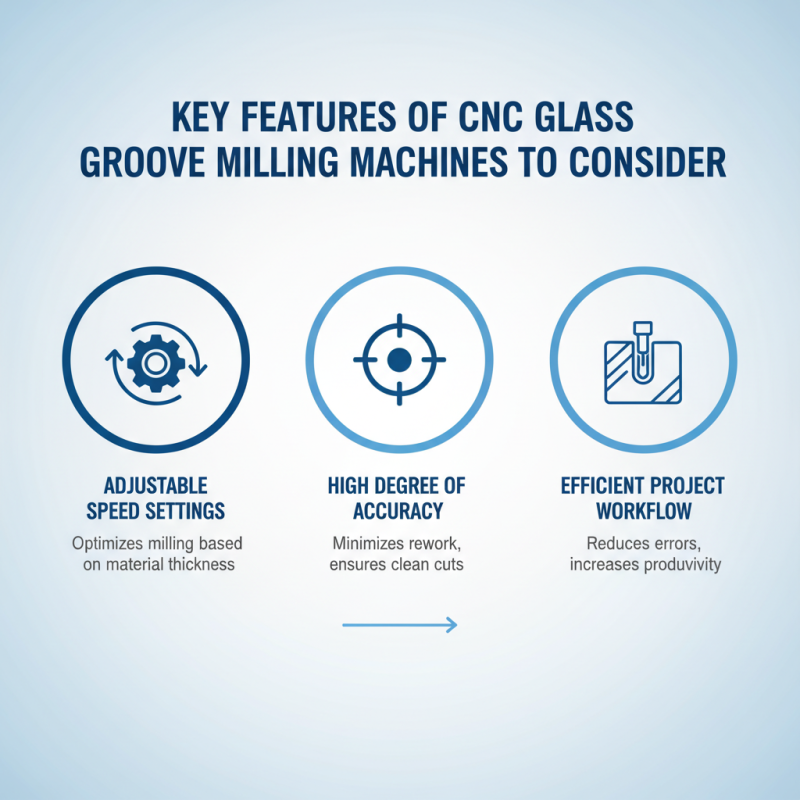
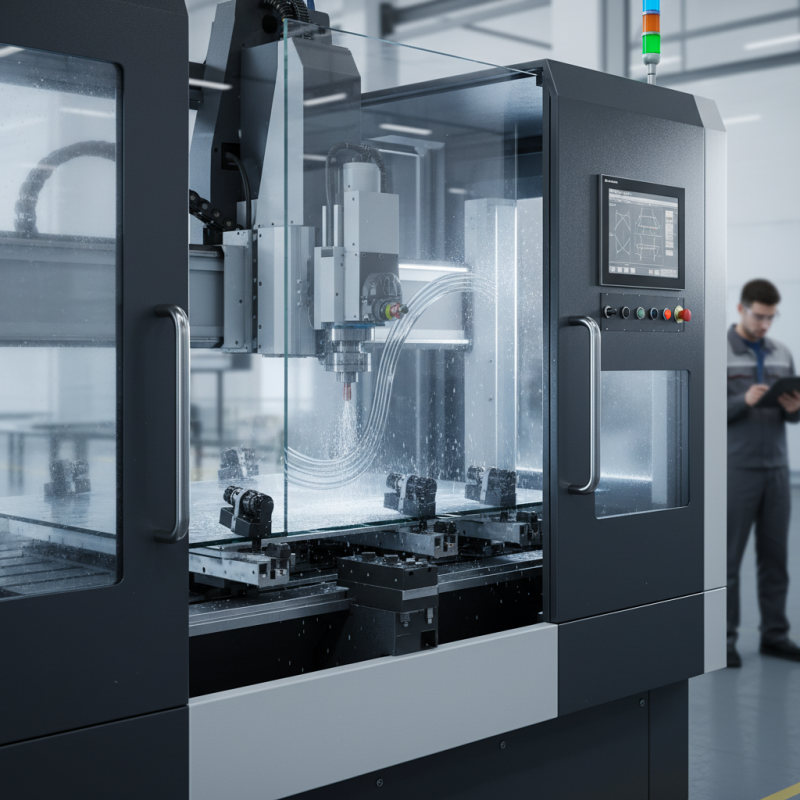
CNC glass groove milling machines offer numerous benefits for various projects. These machines are designed specifically for precision work, making intricate cuts in glass with ease. They allow for highly accurate grooves that enhance both functionality and aesthetics. With adjustable settings, users can create unique designs tailored to their specifications.
The efficiency of CNC machines cannot be overstated. They reduce manual labor and significantly speed up production times. This efficiency can lead to cost savings, especially in large-scale projects. Operators might still face challenges in calibrating the machine. Misalignments can occur, potentially affecting the final output. Continuous monitoring is essential to maintain quality.
Another notable benefit is versatility. CNC glass groove milling machines can handle different glass types. They adapt to various thicknesses, making them suitable for diverse applications. However, it’s crucial to ensure proper tooling is used for optimal results. Neglecting this can lead to wear and tear on the machine. In reflection, each project requires a tailored approach to fully leverage these machines' potential.
Why Choose a CNC Glass Groove Milling Machine for Your Projects? - Benefits of Using CNC Glass Groove Milling Machines in Projects
| Feature |
Description |
Benefits |
| Precision |
CNC machines provide high levels of accuracy in milling grooves. |
Ensures detailed and intricate designs are achievable. |
| Automation |
CNC technology automates the milling process, reducing manual labor. |
Increases efficiency and reduces human error. |
| Versatility |
Can handle various materials, including different types of glass. |
Enables a range of projects from simple to complex designs. |
| Consistency |
Produces uniform results across multiple pieces. |
Guarantees high quality in bulk production scenarios. |
| Speed |
Faster milling process compared to traditional methods. |
Reduces turnaround time for projects, enhancing productivity. |
How CNC Technology Enhances Precision and Efficiency in Glass Working
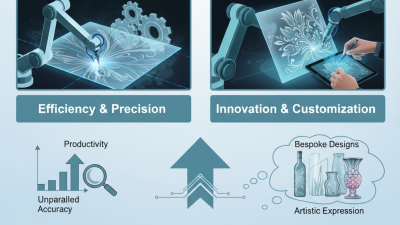
CNC technology revolutionizes glass working. The precision it offers is unmatched. Every cut and groove can be executed with accuracy. This leads to cleaner edges and better-fitting pieces. CNC machines can operate with intricate designs that manual tools cannot replicate. The efficiency gained minimizes waste and reduces production time.
Tips: When using a CNC glass groove milling machine, always double-check your designs. Small errors can lead to significant issues. Keep your machine well-maintained for optimal performance.
CNC machines do require training. Operators need to understand software and hardware. Many users face initial frustrations with programming. It helps to practice with simple projects first. Once familiar, the possibilities expand dramatically. Consider each completed project an opportunity for improvement.
Comparing CNC Glass Groove Milling Machines with Traditional Methods
CNC glass groove milling machines have transformed the way professionals approach glass projects. Compared to traditional methods, these machines offer unmatched precision and efficiency. A recent industry report indicates that using CNC technology can improve production speed by up to 40%. This means projects are completed faster, meeting tight deadlines effectively.
Traditional milling methods often involve manual labor, which can lead to inconsistencies. According to studies, human error accounts for about 30% of defects in glass production. This not only raises costs but also impacts quality. CNC machines minimize these errors through computer-controlled processes that ensure accuracy. The repetitive nature of traditional techniques may also lead to fatigue, increasing the risk of mistakes.
Tip: When choosing a CNC machine, consider the software compatibility. This can streamline the entire process. Also, invest in proper training for your team to fully utilize the machine's capabilities. Familiarity with the technology can reduce the learning curve and enhance productivity from the start. However, it’s crucial to assess whether your team is ready for this shift. Adapting to CNC may pose challenges, but the long-term benefits outweigh the initial learning hurdles.
Applications of CNC Glass Groove Milling Machines Across Various Industries
CNC glass groove milling machines are essential in many industries. They are widely used in the automotive, construction, and electronics sectors. In 2022, the global market for CNC machines reached $78 billion, with a significant portion attributed to glass processing. This growth highlights the rising demand for precision and efficiency.
In the automotive industry, CNC glass groove milling machines create slots and grooves in windshields. This enhances adhesive bonding, improving vehicle safety. Reports show that 65% of automobile manufacturers favor CNC technology for its accuracy. In construction, these machines are pivotal for fabricating glass panels. They guarantee consistent quality and precise measurements, meeting industry standards.
Beyond automotive and construction, the electronics industry also benefits. CNC machines produce components with intricate designs, which are essential for modern devices. However, some businesses struggle with the learning curve associated with CNC technology. This sometimes leads to underutilization of the machines' full potential. Nonetheless, the advantages they offer far outweigh these challenges. Companies must carefully consider their integration for optimal results.